


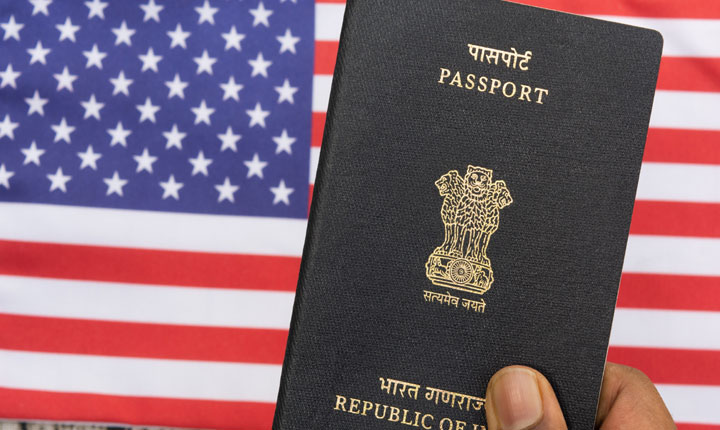


The Department of Homeland Security (DHS) has included a proposal on its long-term regulatory agenda (identified under RIN 1615-AD14) to rescind the 2015 rule that established the Employment Authorization Document (EAD) pathway for certain H-4 dependent spouses. If eventually finalized, the measure would strip eligible spouses of H-1B visa holders of their work authorization and restore the historical framework where H-4 dependent status does not grant independent employment rights.
Mechanics of the H-4 EAD Framework:
Introduced in 2015, the H-4 EAD program allows specific dependent spouses to apply for work authorization provided their H-1B partners have advanced sufficiently in the employment-based green card process. Qualifying criteria include having an approved immigrant petition (Form I-140) or maintaining an H-1B status extension beyond the standard six-year limit due to extensive backlogs. Without this EAD, H-4 visa holders cannot legally accept employment, change jobs, or generate independent income within the United States.
Disproportionate Impact on Indian Families:
The proposed policy shift carries profound consequences for Indian nationals, who historically make up the vast majority of H-1B beneficiaries and H-4 EAD holders. Data from U.S. Citizenship and Immigration Services (USCIS) indicates that Indian nationals accounted for 71% of all approved H-1B petitions in fiscal year 2024, while a Congressional Research Service analysis previously found that roughly 93% of approved H-4 EAD applications were issued to Indian nationals, predominantly women. Because employment-based permanent residency pathways for Indian professionals can stretch for years due to country caps, losing the EAD option forces dual-income households to rely on a single salary and re-evaluate their long-term stay in the U.S.
Current Status and Immediate Outlook:
The regulatory entry does not signify an immediate cancellation of active work permits. The proposal is currently classified as a long-term action with no set timeline for a Notice of Proposed Rulemaking (NPRM) to appear in the Federal Register. Before any policy can change, the government must publish an NPRM, execute a public comment period, review feedback, and issue a final rule specifying an effective date. Current H-4 EAD holders remain fully authorized to work under existing regulations and should continue managing their document validity and renewal requirements normally.