



The Department of Homeland Security (DHS) has implemented a new interim final rule broadening the eligibility process for certain children born in the United States to foreign government personnel to register as lawful permanent residents. This regulatory update directly executes President Donald Trump’s Executive Order 14418, expanding upon a long-standing framework that previously only covered children born to accredited foreign diplomatic officers.
To qualify, neither parent can be a U.S. citizen, and at least one parent must have been employed by a foreign government during the child’s birth. The rule took effect on September 4 and applies exclusively to children born on or after that date.
Defining Broadened Categories and Key Exclusions:
Under the revised regulations, the terminology shifts from “foreign diplomatic officer” to the more inclusive “foreign government employee.” This updated classification encompasses:
Accredited foreign diplomatic officers and nationals working directly for their national embassies or consulates.
Individuals performing official duties on behalf of foreign governments.
Staff members employed by international organizations that possess formal international-organization immunity.
However, the framework explicitly excludes several groups from utilizing this pathway. Exclusions apply to personal staff and attendants—such as private assistants, chauffeurs, and housekeepers as well as select employees of state-owned enterprises, third-country nationals working on behalf of foreign governments, independent contractors, and foreign government personnel visiting the United States in a personal capacity.
Procedural Mechanics and Application Updates:
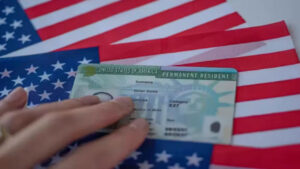
Qualifying individuals can be recognized as lawful permanent residents starting from birth, though completing the registration process remains strictly voluntary. Those who opt out or do not possess U.S. citizenship continue to fall under standard alien-registration mandates defined by the Immigration and Nationality Act.
To manage the transition, DHS is updating relevant paperwork. Form I-485 and its associated filing instructions are being revised to replace diplomatic-specific terminology with the broader foreign government employee classifications. Additionally, Form G-325R is being updated to accommodate U.S.-born children who do not acquire birthright citizenship, choose not to use the modified permanent-residence procedure, and remain bound by federal alien-registration requirements.
Legal Constraints and Historical Background:
The rollout of the rule comes with immediate procedural limitations. DHS acknowledged that it will not enforce the provisions against members of the certified class in Casa Inc. v. Trump, nor will it take actions that violate an active preliminary injunction issued by the U.S. District Court in Maryland. These operational restrictions will remain in effect until the federal government secures appropriate relief through the judicial system.
The policy touches on complex constitutional ground regarding the Fourteenth Amendment, which guarantees birthright citizenship to individuals born on U.S. soil and subject to its jurisdiction. The U.S. Supreme Court has historically recognized narrow exceptions to this principle, including children born to accredited foreign diplomatic representatives who possess diplomatic immunity. Federal immigration authorities have accommodated these families by permitting permanent resident registration since at least the 1940s, with formal regulatory procedures established in 1982 requiring applicants to demonstrate non-abandonment of U.S. residence.