


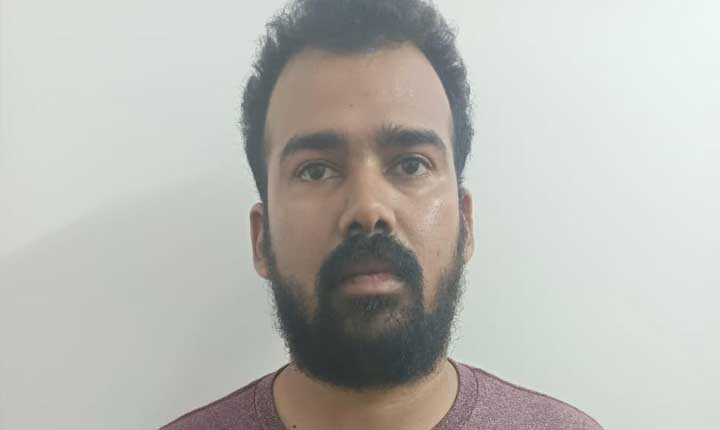


A software engineer based in Austin, Texas, was apprehended by law enforcement authorities in India following allegations that he masterminded a massive wave of over 1,500 fraudulent bomb-threat emails. The threats targeted a wide array of high-profile locations across the country, including major airports, commercial flights, educational institutions, government offices, and prominent public figures.
The suspect identified in reports as Sharath Subramanian Shankar (alternatively spelled Sarath) was intercepted and detained at Chennai International Airport upon his arrival in India on July 22. Following his detention at the immigration checkpoint, he was handed over to the Tamil Nadu Anti-Terrorism Squad for formal interrogation and legal proceedings.
Scale of the Operation and Targets:
Originally hailing from Ambasamudram in Tamil Nadu’s Tirunelveli district, Shankar was employed by an unpublicized technology firm in Austin, Texas. Investigators claim he was the mastermind behind a persistent series of malicious communications transmitted between 2023 and 2025, which ultimately triggered more than 100 formal criminal cases across Tamil Nadu alone.
The extensive list of targets disrupted by these hoaxes included schools, colleges, Anna University, government facilities, politicians, senior law enforcement officials, and retired intelligence personnel. Each incident forced security agencies to deploy heavy police presence, bomb detection units, and disposal squads, causing widespread panic and massive logistical strain. Authorities confirmed that all threats linked to this campaign turned out to be complete hoaxes. In Chennai’s jurisdictional limits alone, over 300 such threats were recorded during 2025.
The Digital Error and Investigation Breakthrough:
Although the perpetrator allegedly utilized advanced anonymizing tools such as the Tor browser, virtual private networks (VPNs), encrypted services, overseas servers, and dark web applications to mask his digital footprint, a fundamental oversight exposed his identity.
According to reports from South First, the breakthrough occurred when Shankar inadvertently replied using his personal email account, creating a traceable link back to his real identity. Capitalizing on this digital slip-up, the Tamil Nadu Cyber Crime Wing tracked his online movements for nearly six months and issued a Look Out Circular (LOC) to alert immigration checkpoints nationwide.
Motive and Subsequent Legal Custody:
Regarding the underlying motivation, sources familiar with the investigation suggest that Shankar claimed he executed the scheme merely to test his capability to evade international law enforcement detection.
Following his court presentation, a George Town court remanded him to judicial custody and subsequently granted six days of police custody to investigators on July 28 for intensive questioning. Furthermore, the legal fallout is expected to expand outside of Tamil Nadu, The Times of India reported that the Mumbai Crime Branch planned to seek his custody regarding parallel hoax threat cases filed within Mumbai between 2024 and 2026.