


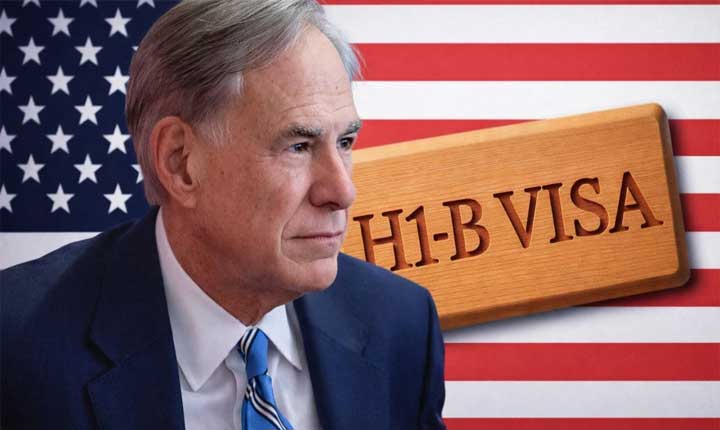


Texas Governor Greg Abbott is intensifying his efforts to restrict foreign professionals by pushing for a complete ban on H-1B visa holders working in public school districts across the state. This follows an earlier executive action this year that placed a freeze on new H-1B hiring across Texas state agencies and public universities. Governor Abbott stated that the number of H-1B employees in public schools should be reduced to zero, arguing that educational institutions should focus on hiring domestic talent.
Targeting Foreign Funding and Influence:
Alongside visa restrictions, Governor Abbott has set his sights on foreign funding and institutional influence within Texas schools. He has formally requested the Texas Legislature to block public schools from accepting gifts, money, or property originating from foreign sources, while also restricting contracts involving foreign governments, organizations, or individuals. Citing examples such as the Austin Independent School District receiving Qatari funding for language and cultural instruction, and other districts participating in Chinese government-backed Confucius Classroom programs, Abbott emphasized that children’s minds should be shaped by state-approved policies rather than external ideologies.
The Broader Political and Demographic Context:
The H-1B visa program which permits highly skilled foreign professionals to work temporarily in the U.S. has become a prominent political flashpoint in Republican-led states. Indian nationals continue to make up the vast majority of beneficiaries, accounting for roughly 78 percent or 220,000 of the 290,000 H-1B extensions granted in fiscal year 2025. Paradoxically, this political opposition arrives alongside increasing demand for skilled foreign labor across multiple Republican-held suburban congressional districts, where federal labor data reveals rising H-1B filings between 2019 and 2025. If enacted by state lawmakers, Abbott’s proposals will completely bar H-1B visa holders from public education roles and introduce significant hurdles for foreign professionals in Texas.