

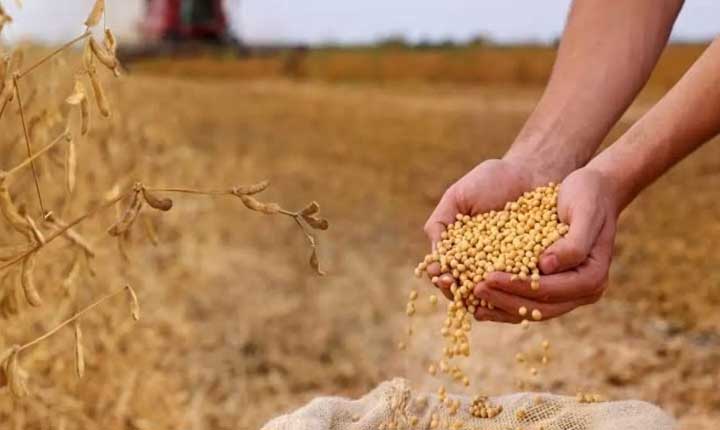


A joint research initiative backed by the US National Science Foundation (NSF) and India’s Ministry of Electronics and Information Technology (MeitY) has united academic and research institutions from both nations to engineer advanced technologies for precision soybean breeding. As part of this international collaboration, Dr. Xiaolei Huang, professor of computer science at the University of Memphis, has been awarded an NSF grant of $528,137.
Announced by US Congressman Steve Cohen on July 30, the project titled “Collaborative Research: VINES: Track 1: NSF-MeitY: SoyWatch: Smart Sensing Network for Precision Soybean Breeding” is scheduled to run from October 1 through September 30, 2029. Congressman Cohen lauded the initiative for advancing global food security and building upon India’s historical legacy in agricultural innovation stemming from the Green Revolution of the 1960s.
Participating Institutions and Consortium:
The multidisciplinary project brings together a diverse group of academic and agricultural research bodies across the United States and India:
United States: University of Memphis, University of Missouri, and Kennesaw State University.
India: Indian Institute of Technology Delhi (IIT Delhi), Sher-e-Kashmir University of Agricultural Sciences and Technology of Kashmir, and the Indian Council of Agricultural Research’s National Soybean Research Institute (NSRI).
Technological Framework and Project Components:
Designed to combat challenges such as pest infestations, crop diseases, and climate volatility faced by farmers in both countries, the project aims to build an integrated smart farming ecosystem powered by advanced sensing, NextG wireless communications, and artificial intelligence. The initiative focuses on three core technical pillars:
Sensor Arrays: Developing specialized hardware to monitor real-time soil nutrients, moisture levels, and environmental conditions.
Wireless Communications: Designing energy-efficient communication networks incorporating drone-supported data collection and passive sensing technologies.
AI & Multimodal Analytics: Creating multimodal large language models that synthesize sensor data, aerial drone imagery, and environmental metrics to drive crop phenotyping, effective pest management, and accurate yield forecasting.
Ultimately, these components will be unified into a comprehensive toolkit to deliver actionable, data-driven agricultural insights, foster cross-border scientific cooperation, and cultivate high-yielding, pest-resistant soybean varieties.