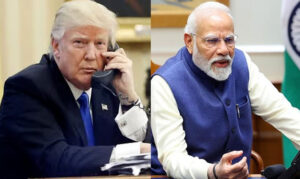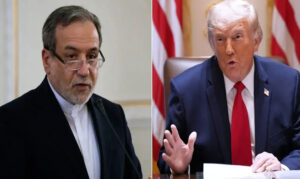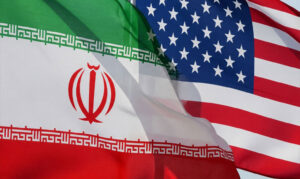


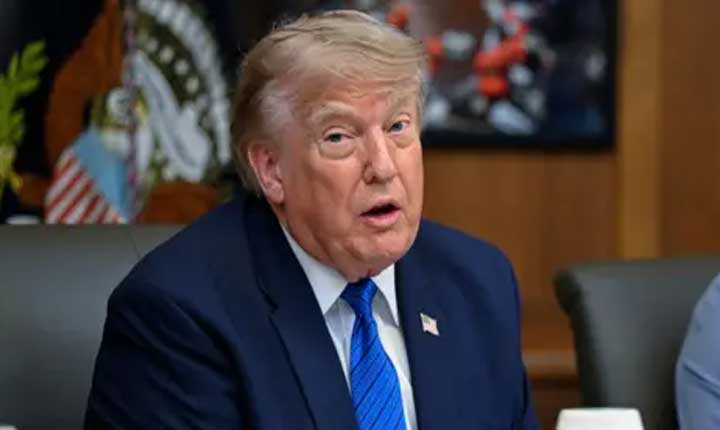


U.S. President Donald Trump has indicated a willingness to let economic pressure mount on Iran rather than initiating fresh military strikes. In a recent interview, Trump noted that the United States is only “semi-negotiating” with Tehran concerning the vital Strait of Hormuz. Highlighting Iran’s severe inflation and lack of financial resources, Trump credited an ongoing U.S. naval blockade for deepening the nation’s economic distress, remarking that Washington is maintaining a low-key posture. This stance represents a noticeable departure from his earlier warnings of escalating bombing campaigns, aligning instead with ongoing indirect discussions between Iran and Oman aimed at reopening the strategic waterway to international maritime shipping.
Leadership Changes and Negotiations in Tehran:
While Tehran claims a maritime agreement is nearing finalization, it has simultaneously laid out an extensive list of preconditions for the United States before shipping activities can resume. These demands include lifting economic sanctions, terminating the naval blockade, withdrawing U.S. forces from the surrounding region, releasing frozen financial assets, and providing compensation for war damages. Furthermore, Iran insists on a permanent halt to attacks against its regional allies in Lebanon, Iraq, Yemen, and Gaza.
Amid these delicate diplomatic maneuvers, the Iranian leadership has reinforced its hard-line stance. Over the weekend, the state-run Islamic Republic News Agency reported that Mohsen Rezaee a military adviser to Supreme Leader Mojtaba Khamenei and former commander-in-chief of the Islamic Revolutionary Guard Corps was appointed to head the Supreme National Security Council. Rezaee, a vocal proponent of absolute Iranian control over the Strait of Hormuz, succeeds fellow hard-liner Mohammad Bagher Zolghadr. Meanwhile, Foreign Minister Abbas Araghchi confirmed that indirect talks via Omani intermediaries are progressing, though direct negotiations with Washington remain ruled out due to alleged violations of a previous interim peace agreement.
Geopolitical Complexities: Gaza, Regional Conflicts, and Oil Markets
The condition requiring a permanent end to hostilities against Iran-backed groups intersects heavily with ongoing conflicts in Gaza and Yemen. A U.S.-backed mediation proposal aimed at disarming Hamas and facilitating an Israeli withdrawal from the Palestinian enclave was recently rejected by Israeli Prime Minister Benjamin Netanyahu. This rejection complicates relations with President Trump, particularly since an Israeli withdrawal serves as a core Iranian prerequisite for reopening the Strait of Hormuz. However, White House officials have indicated that Trump remains unfazed, recognizing Netanyahu’s domestic political pressures ahead of an upcoming October election, even as Israeli forces have noticeably dialed back the intensity of their attacks in Gaza over the past week.
Concurrently, regional tensions persist in Yemen, where Iran-backed Houthi rebels continue clashes with forces supported by Saudi Arabia. The Houthi movement recently claimed responsibility for an attack targeting Saudi Aramco’s Jazan refinery, which resulted in a minor fire that was swiftly extinguished without casualties. This incident marks the second such blaze at the 400,000 barrel-a-day facility within a single month, following similar satellite-verified damage in late July. Despite these overlapping geopolitical strains and the Strait of Hormuz remaining a critical choke point historically handling one-fifth of global oil and liquefied natural gas transit global crude markets remained relatively steady, with benchmark Brent crude trading around $83.61 following a multi-session rally.