

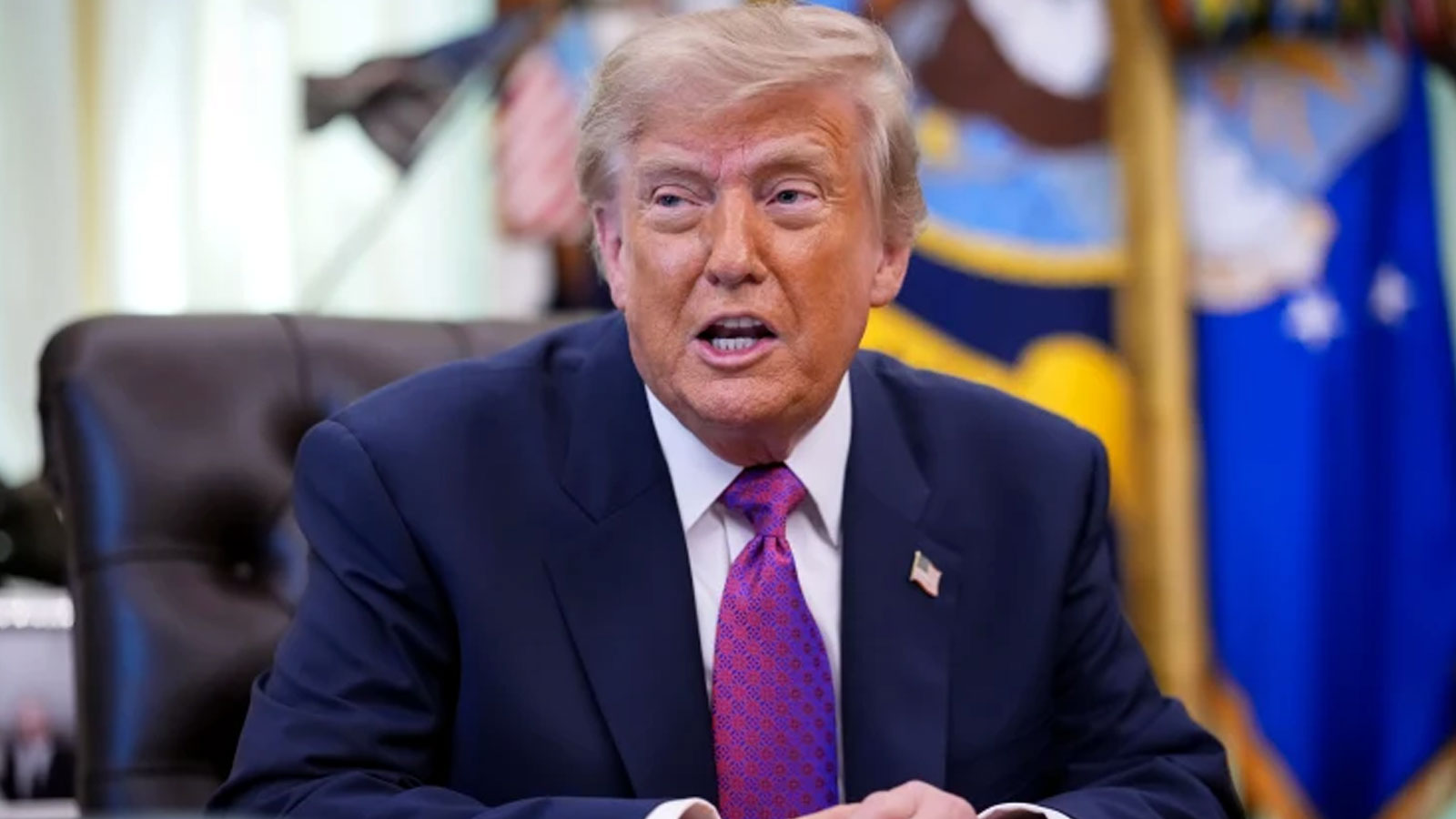


Ontario Premier Doug Ford answered U.S. President Donald Trump’s executive order directing federal agencies to rename Lake Ontario as “Lake America” by unveiling a giant billboard-sized sign on the Canadian shoreline. Joined by Niagara West Member of Provincial Parliament Sam Oosterhoff at the Fifty Point Conservation Area in Grimsby, Ontario, Ford unveiled the 24-by-12-foot sign—which stands roughly two stories high on 6-foot legs and features the message “Lake Ontario. Now and Always” repeated in French.
Canadian Defiance and Mockery Amid Worsening Trade Relations
Reaction to Decrees: Following months of tariffs, threats to make Canada a U.S. state, and personal attacks on its leaders, Canadian figures met Trump’s move with a mix of defiance and mockery rather than outrage.
Political Satire: Manitoba Premier Wab Kinew compared Trump’s executive order to an aging, over-the-hill rock band trying to replay an old hit like the “Gulf of Mexico” renaming, calling it a sad attempt to play hits for his base.
Broader Subjugation Concerns: Historian Robert Bothwell argued that the dispute runs deeper than jokes, suggesting Trump’s broader aim is to subordinate Canada and either make it a colony or absorb it. University of Toronto professor emeritus Nelson Wiseman added that Trump is irritated by Canada’s refusal to act like a vassal state.
Collapsed Negotiations: The tense exchange arrives as bilateral relations deteriorate over trade, with talks collapsing after both governments accused each other of late demands, prompting Canada to announce retaliatory tariffs for next month.
War of Words and Indigenous Heritage
The renaming decree coincided with an escalating war of words between Trump and Premier Ford, whom Trump dismissed as Prime Minister Mark Carney’s “flunky” after Ford stated that Ronald Reagan would be “disgusted” by Trump’s tariff policies. Meanwhile, Wendat Nation Grand Chief Pierre Picard criticized Trump’s move as an unacceptable attempt to erase Indigenous history and identity. The name Lake Ontario originates from the Huron Indigenous word oniatarí:io, meaning “lake of shining waters,” predating both the Canadian Confederation and the U.S. Declaration of Independence.