


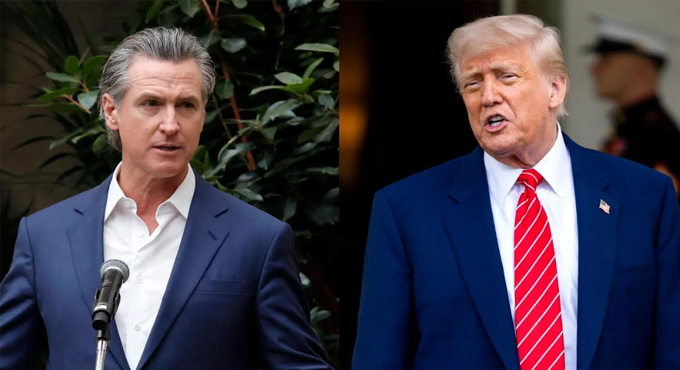


The Trump administration is intensifying its confrontation with California over environmental and climate policies, challenging the state’s international climate partnerships while seeking to loosen protections on federal forest lands.
California has long pursued some of the nation’s strongest climate and conservation policies, while President Donald Trump has moved toward expanding fossil fuel production, easing environmental regulations and rolling back protections introduced under the Biden administration.
The latest conflict centers on the U.S. Forest Service proposal to rescind the 2001 Roadless Area Conservation Rule, which restricts road construction and commercial logging in undeveloped national forests. The change could affect more than 4 million acres in California.
The administration argues that removing the restrictions would give local forest managers greater flexibility to reduce wildfire risks and improve forest health. California officials and environmental groups, however, contend that building roads into remote forests could actually increase wildfire danger. Studies cited by critics indicate that human-caused fires occur more frequently near roads.
California Natural Resources Secretary Wade Crowfoot has said existing protections have not prevented forest treatments aimed at reducing wildfire risks. He warned that increased construction, logging and mining in remote areas could raise both fire risks and firefighting costs.
The dispute also extends to California’s international climate partnerships. Republican lawmakers have asked federal officials to investigate the state’s climate agreements with Chinese government-linked institutions, questioning whether they exceed constitutional limits on states engaging in foreign affairs.
The lawmakers cited agreements dating to former Governor Jerry Brown’s administration involving carbon reduction, emissions trading and electric vehicles, as well as partnerships involving the University of California and Chinese research institutions. They also pointed to Governor Gavin Newsom’s 2023 meeting with Chinese President Xi Jinping.
They have requested reviews by the Justice Department and FBI, including scrutiny of possible technology transfers involving batteries, electric vehicles, hydrogen, offshore wind and electricity-grid software.
California, meanwhile, has increasingly positioned itself as a counterweight to Washington on climate policy. It has expanded international partnerships and argues that its environmental standards and economic influence can serve as a model beyond its borders.
The state is also pursuing legal challenges against federal environmental rollbacks, including changes involving greenhouse-gas restrictions and a federal review of California’s Coastal Management Program. The widening disputes underline the growing political, environmental and constitutional confrontation between California and the Trump administration.