


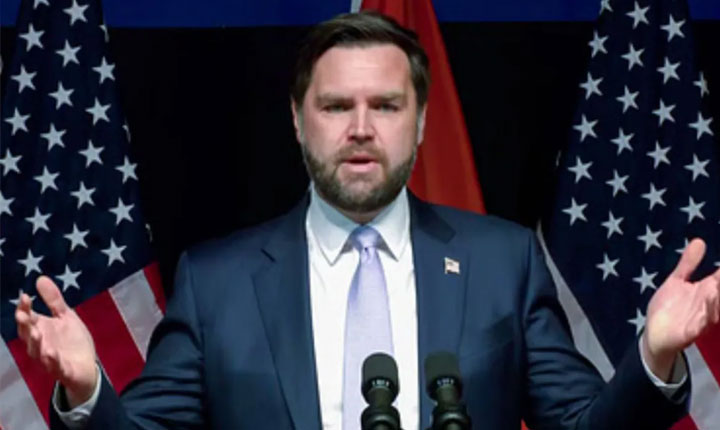


US Vice President JD Vance has strongly defended the administration’s controversial $100,000 payment requirement for certain H-1B visa petitions. Speaking on the All-In Podcast, Vance emphasized that the primary goal of the employment-based visa system is to attract elite global talent capable of adding substantial value to the United States economy, rather than serving as a mechanism to minimize labor costs.
Protecting American Workers from Cost-Cutting Substitution:
To illustrate the administration’s concerns regarding systemic abuse, Vance presented a hypothetical scenario involving an American employee earning $60,000 being substituted by a foreign worker earning $45,000. He asserted that the H-1B framework should never be leveraged as a tool to undercut local wages or displace similarly qualified domestic workers. Furthermore, Vance criticized corporate practices where companies claim acute labor shortages while simultaneously conducting large-scale domestic layoffs, stating that organizations cutting thousands of local jobs should not look to foreign markets for replacements.
Rationale Behind Executive Actions and Administrative Reforms:
Addressing the administration’s reliance on executive actions rather than legislative paths, Vance noted that Congress lacked the political will required to enact comprehensive statutory overhauls to address ongoing loopholes and fraud. This stance is reflected in recent policy measures, including a proclamation extending restrictions on specific H-1B entries through September 21, 2027, which carries the $100,000 payment requirement for covered petitions outside the country, subject to specific exceptions.
Impact on Employers and the Global Professional Community:
The strict financial requirements and intensified administrative scrutiny have generated considerable uncertainty for corporate sponsors and applicants worldwide. Given that Indian nationals constitute a massive share of H-1B beneficiaries, these policy directions are being monitored closely by international professionals and technology firms alike. The administration’s ongoing focus signals that future compliance will heavily depend on a company’s ability to prove that sponsored roles genuinely require unique specialized skills rather than lower-cost staffing.