


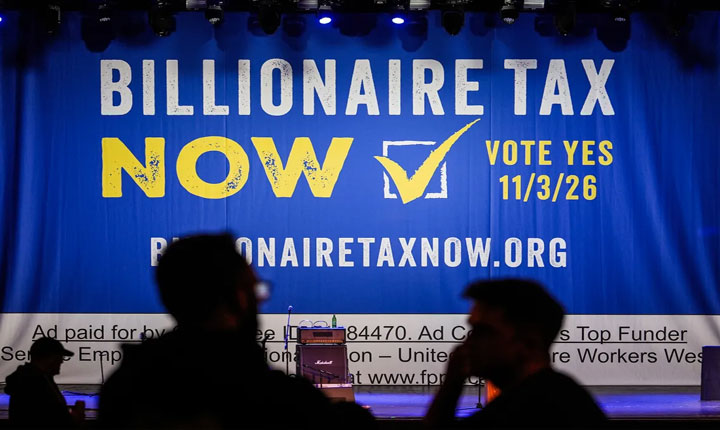


The most closely watched measure on California’s statewide ballot a proposed one-time 5% wealth tax on billionaires currently lacks majority support, according to a poll published Friday by UC Berkeley’s Institute of Governmental Studies (IGS). The survey reveals that 45% of likely voters support Proposition 40, falling below the threshold required to pass. Meanwhile, 42% are opposed and 13% remain undecided. This reflects a slight dip from August polling, with experts noting that ballot measures for new taxes typically struggle to pass when sitting below 50% support so close to Election Day.
Countermeasures and Division Among Voters:
Two opposing countermeasures on the ballot are also failing to secure majority support. Proposition 41, backed by opponents to nullify aspects of the wealth tax, holds 37% support, 33% opposition, and 30% undecided. Proposition 42, which proposes prohibiting new personal property taxes passed after January 1, 2026, leads slightly with 43% support, 34% opposition, and 23% undecided. Both countermeasures feature provisions that could void Proposition 40 if they pass with more yes votes, though large portions of voters remain undecided.
Structure and Arguments Surrounding the Wealth Tax:
Proposed by SEIU United Healthcare Workers West, Proposition 40 targets state residents with a net worth exceeding $1 billion. If approved, 90% of the generated revenue would fund healthcare programs, while the remaining 10% would support food assistance and education. Proponents argue the tax addresses wealth inequality, whereas critics warn that the measure will drive entrepreneurs and vital income tax revenue out of the state.
Broader Political Trends on the Ballot:
Voter sentiment toward other fiscal and security measures shows varied momentum. Proposition 3, which seeks to make permanent high income tax rates on top earners, holds a solid lead at 54%. Conversely, Proposition 39 regarding voter identification requirements is trailing with 39% in favor and 52% opposed, as analysts note opponents have successfully tied the measure to national political agendas.