

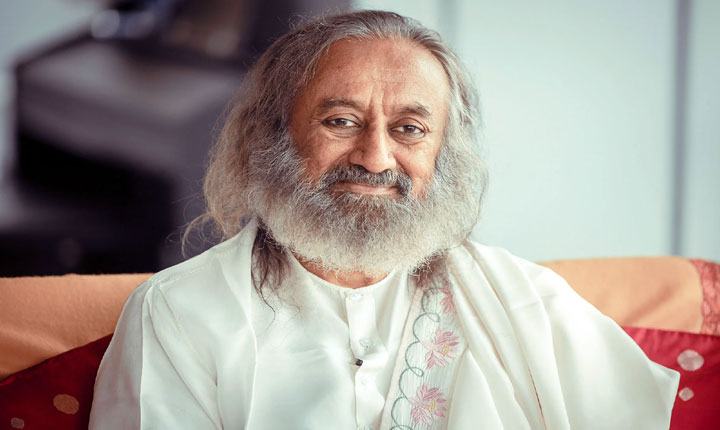


Speaking at Semafor’s The Next 3 Billion summit in New York, global spiritual leader and Art of Living founder Gurudev Sri Sri Ravi Shankar emphasized that economic prosperity cannot be divorced from inner peace and human well-being. Addressing an international audience of heads of state, global institutional leaders, and executives gathered to discuss digital inclusion and technology-driven growth, he noted that sustainable development requires looking beyond cold metrics. “Prosperity comes with peace. If there is no peace, there can’t be prosperity,” Ravi Shankar stated during his conversation with Semafor Co-Founder and CEO Justin B. Smith. He pointed out that systemic wealth gaps persist across virtually every major economy, including the United States, requiring a dual approach where disadvantaged individuals overcome “victim consciousness” to take charge of their progress, while the affluent cultivate deeper empathy and a willingness to share. Furthermore, he identified deep-rooted corruption as a primary barrier preventing critical resources from reaching grassroots communities across the Global South.
Transforming Mindsets and Scaling Grassroots Entrepreneurship:
Highlighting practical solutions to socioeconomic challenges, Ravi Shankar shared insights from a rural empowerment initiative in India. When an Art of Living center initially attempted to roll out 200 government-backed projects for 500 unemployed youths, the participants rejected them out of skepticism and a deep-seated belief that success was impossible. However, a specialized two-month program geared toward fostering an entrepreneurial mindset successfully shifted their outlook toward self-reliance. This model has since been successfully scaled to multiple African nations, including Kenya, Ghana, Nigeria, Botswana, and South Africa. Transitioning to the modern corporate landscape, he warned that unmanaged workplace stress severely damages communication and productivity, stressing that employees must feel a fundamental sense of security and belonging to navigate economic and structural uncertainties.
Perspectives on Artificial Intelligence and Human Consciousness:
The dialogue also touched upon the rapid rise of artificial intelligence and its impact on the future of human labor and capability. Responding to a question from Smith regarding AI, Ravi Shankar offered a lighthearted take: “There’s an absence of intelligence, artificial intelligence, and absolute intelligence”. Concluding the session on a reflective note, Smith remarked that given the choice, he would select the third tier of intelligence. To further explore these intersections between cognitive science, human potential, and spiritual awareness, Ravi Shankar established the Institute of Absolute Intelligence, dedicated to the scientific exploration of human consciousness.