

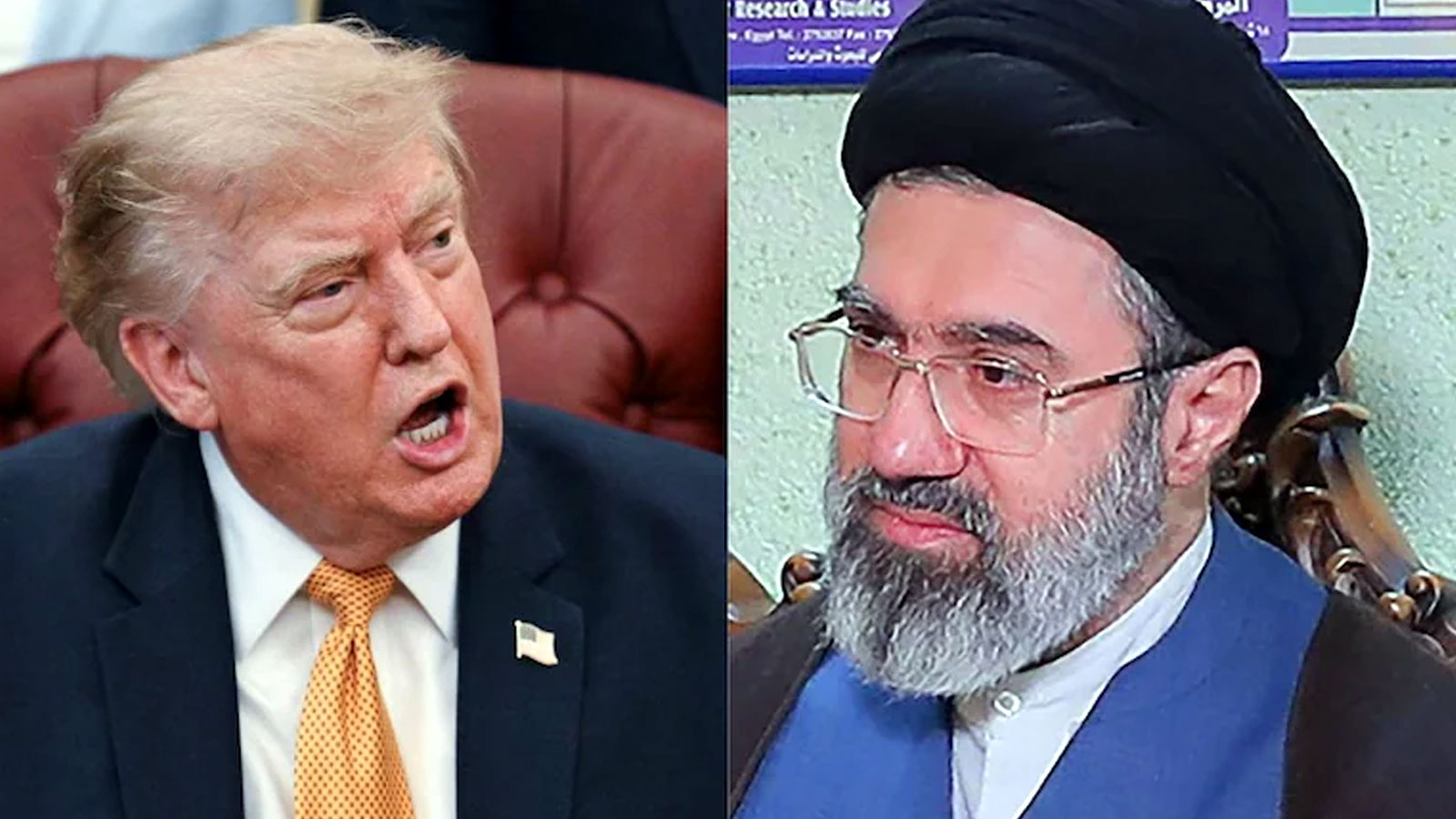


Hyderabad: Iran responded sharply on Saturday, stating that the Strait of Hormuz “has been Iranian, is Iranian, and will remain Iranian”. The firm rejection followed remarks from US President Donald Trump claiming that the United States would soon finish defeating Iran and declare the vital energy corridor part of American territory.
Iran’s Defiant Stance and Response to Trump
Iranian Deputy Foreign Minister Kazem Gharibabadi emphasized that the strategic waterway—which was effectively closed by Tehran at the onset of the Middle East conflict—will “only be closed and opened under Iran’s command”. Addressing Trump’s comments on X, Gharibabadi remarked:
“The Strait of Hormuz cannot be seized by tweet, nor by aircraft carrier, nor by issuing an order, nor by an election speech.”
“Once and for all, accept the reality: up to this point, you have suffered strategic and heavy defeats… As long as you do not accept the reality of defeat and cease your fanciful delusions, Iran will continue to enforce the blockade.”
Gharibabadi’s statements came shortly after Trump asserted during a political rally at a New York police academy that he would soon declare the vital energy passageway a territory of the United States following the completion of Iran’s defeat. Defending the ongoing conflict, Trump told the rally that paying slightly higher gasoline prices is a necessary cost to prevent “a very evil country” from obtaining a nuclear weapon—a core rationale cited when launching the war in February. However, The Wall Street Journal noted that an unnamed White House official later clarified that Trump’s declaration about seizing the territory was made in jest.
Competing Claims Over Control of the Waterway
The war of words follows previous assertions by Trump on Truth Social claiming that the US maintains “total control over the Strait of Hormuz” and will keep it, backed by what he described as a “WALL OF STEEL” naval blockade that Iran cannot bypass.
In sharp contrast, the Iranian military dismissed Trump’s claims as fabrications. Ebrahim Zolfaghari, spokesperson for Iran’s central military command (Khatam-al Anbiya), stated on state television that assertions of normal ship transit are entirely false. Zolfaghari maintained that the strait remains completely under the management and control of Iran’s armed forces, warning that no commercial vessel or tanker can pass safely without explicit permission and supervision. Additionally, Iranian top diplomat Abbas Araghchi criticized Washington’s approach on X, stating that the US has a history of miscalculations driven by intelligence failures, ranging from the initiation of the war to current assumptions regarding the strait.
Background of the Conflict
The ongoing military confrontation in the Middle East ignited on February 28 when joint US and Israeli forces launched strikes against Iran, resulting in the deaths of multiple leaders, including the 86-year-old Supreme Leader Ali Khamenei. In retaliation, Iranian forces launched targeted strikes against American and Israeli assets across the region.