


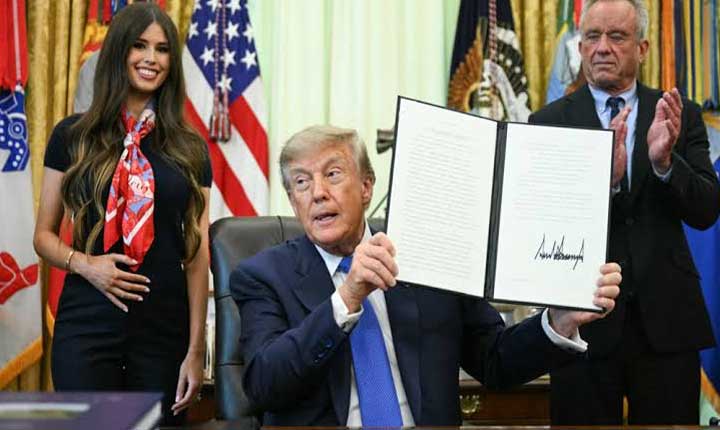


President Donald Trump has signed an executive order initiating a sweeping restructuring of federal childhood immunization guidelines. Titled the “Gold Standard Childhood Vaccine Recommendations,” the directive instructs the Department of Health and Human Services (HHS) to draft plans that reduce the number of routine immunizations, advocate for single-disease shots rather than combination vaccines, and grant parents greater flexibility in immunization scheduling. While the order does not instantly alter domestic vaccine inventories, modify pediatrician mandates, or rewrite state school enrollment requirements, it establishes a formal framework to reshape national health recommendations.
Structural Changes and Retained Immunizations:
Under the administration’s updated framework, eleven specific illnesses remain designated for universal childhood immunization: measles, mumps, rubella (MMR), diphtheria, tetanus, pertussis, polio, Haemophilus influenzae type B, pneumococcal disease, human papillomavirus (HPV), and chickenpox.
However, several other vaccines have been shifted into alternative categories:
Shared Clinical Decision-Making: Vaccines for influenza and COVID-19 now require parents and healthcare providers to collaboratively determine necessity.
Targeted Recommendations: Hepatitis A, hepatitis B, rotavirus, and meningococcal vaccines are no longer categorized as routine universal immunizations, shifting instead toward high-risk or selective administration.
Federal agencies are instructed to implement these recommendations within their legal jurisdiction, and state and territory governments are encouraged to re-evaluate their respective public school attendance mandates.
Practical Limitations and Timeline for Single-Disease Shots:
A primary logistical hurdle of the initiative is the current unavailability of standalone measles, mumps, and rubella vaccines within the United States. White House officials have acknowledged that replacing the combined MMR shot with three distinct injections cannot happen immediately. Consequently, the administration has granted HHS a 90-day window to formulate actionable strategies for sourcing single-disease vaccines through partnerships with private manufacturers or international suppliers.
Insurance Coverage and Financial Impacts:
For American families navigating these changes, immediate out-of-pocket costs remain unaffected. Major insurance providers, including CVS and Blue Cross Blue Shield, indicated they are reviewing the mandate while confirming plans to continue covering Centers for Disease Control and Prevention (CDC)-recommended pediatric vaccines without co-pays. Additionally, the federal Vaccines for Children program will continue supplying eligible children with necessary immunizations during the transition.
Administration Rationale and Scientific Context:
The White House states that the overhaul aims to expand parental autonomy and align American immunization practices with those of peer developed nations. The directive also mandates that HHS conduct supplementary safety and efficacy research, alongside developing alternatives to aluminum-based vaccine adjuvants.
Public health experts and media reports emphasize that the order does not stem from new safety or efficacy data indicating that combination vaccines are hazardous, nor does extensive scientific research link vaccines to autism. Furthermore, because state school attendance laws and federal health regulations operate independently, the executive order is anticipated to encounter various legal, regulatory, and political challenges from medical and legislative bodies.