


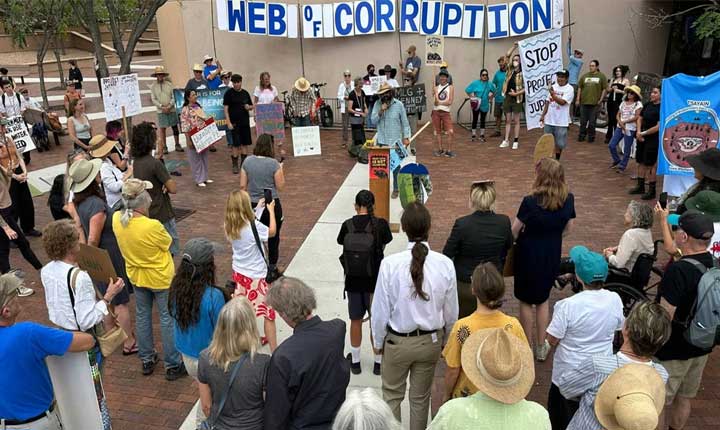


Across the United States, a rapidly expanding wave of artificial intelligence data center developments has ignited a rare, cross-partisan backlash uniting conservative farmers, environmentalists, and local residents against massive tech infrastructure. From rural Nebraska and Texas to New Mexico and Pennsylvania, communities are pushing back over concerns regarding dwindling farmland, strained water supplies, and surging electricity bills. While supporters including President Donald Trump, certain labor leaders, and industry executives tout the multi-billion-dollar investments as economic engines crucial for geopolitical supremacy against China, local opposition has forced elected officials from both parties to enact moratoriums, halt approvals, and reconsider lucrative tax breaks.
Grassroots Resistance in Rural Nebraska:
In Cass County, Nebraska, residents packed a local firehouse in Murdock (population ~275) to protest data center expansions moving at breakneck speed. This unusual coalition brought together conservative farmers, such as fifth-generation grower Judy Stroy, and the state Sierra Club chapter. Local leaders responded by approving a 12-month moratorium on data center developments.
The freeze impacts projects such as:
Tenaska Project: A plan to option over 1,300 acres along Highway 75 near Murray and Beaver Lake for a potential data center and dedicated natural gas power plant.
CyrusOne Site: Nearly 400 acres controlled outside Plattsmouth, where developers have acquired land for up to four times typical agricultural values ($10,000 per acre), tempting cash-strapped farmers facing rising diesel costs and declining soybean exports.
Nebraska Sierra Club attorney Ken Winston emphasized that communities must retain the right to say no to developments that threaten dwindling resources, while labor advocates like Nebraska State AFL-CIO President Mike Gage and labor relations professional Heather McKenzie argue that the centers provide long-term construction and operational jobs that can curb the exodus of young workers.
Water and Development Battles in New Mexico:
In Doña Ana County, New Mexico, local opposition centers around Project Jupiter, a massive $165 billion data center complex planned near the Mexican border by Oracle. The project has sparked deep anxiety amid severe regional drought, drying sections of the Rio Grande, and the largest reservoir sitting at just 1.3% capacity.
Community and Legal Pushback: Water attorney and Republican commission candidate Samantha Barncastle Salopek noted that farmers and ranchers fear losing out as they compete for dwindling water supplies.
Corporate Pledges: Oracle has promised $50 million for local water and wastewater systems, $4.7 billion in taxes, thousands of jobs, and real-time agricultural sensors designed to save 21 million gallons of water annually.
Judicial Intervention: Despite these pledges, the Center for Biological Diversity filed an emergency petition, leading the New Mexico Supreme Court to halt authorization for new well drilling supplying construction water while legal challenges proceed.
Political Landscape and Bipartisan Fallout:
The data center boom has scrambled traditional political alignments ahead of midterm elections:
Federal Stance: President Trump champions data centers for creating jobs, lowering taxes, and countering China, while House Speaker Mike Johnson warned against a federal construction pause. Conversely, a July Fox News poll indicated that most registered voters including 60% of Republicans and 53% of MAGA voters oppose building data centers in their local areas.
State-Level Moratoriums: Democratic New York Gov. Kathy Hochul and Republican Texas Gov. Greg Abbott both enacted halts or strict audits on new data centers to protect local power grids, while Pennsylvania Gov. Josh Shapiro tied construction permits and tax exemptions to strict performance standards.
Battleground Campaigns: Candidates across the political spectrum, from Wyoming GOP congressional hopeful Chuck Gray to Democratic Scranton Mayor Paige Cognetti, are leveraging anti-data center platforms to appeal to voters weary of corporate encroachment and utility strain.