


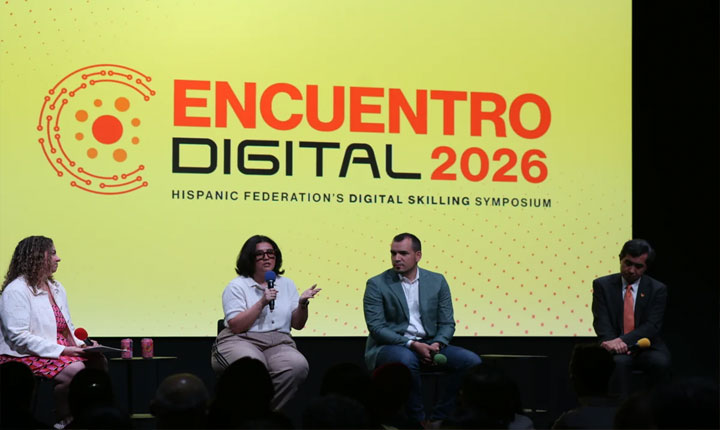


As artificial intelligence reshapes Silicon Valley, Latino leaders are advocating for a larger role in determining who benefits from the technology and who might be left behind. This critical issue was the focus of a two-day conference in San Jose hosted by the New York-based Hispanic Federation, marking the first time the event was held in the region. Bringing together nonprofit leaders and community advocates, the conference featured discussions on digital skills, education, economic mobility, and how Latino communities can engage in an industry poised to generate massive wealth.
The gathering coincided with new research emphasizing a deep divide between Latinas’ contributions to Silicon Valley and their access to its economic advantages. A preliminary Health and Wealth of Latinas in Silicon Valley report revealed that while Latinas make up over 327,000 women across Santa Clara and San Mateo counties and boast a 64% labor force participation rate the highest among women in the region only 3% are employed in computer, engineering, and science occupations, with nearly half working in service or office-support positions. Gabby Chavez-Lopez, executive director of the Latina Coalition of Silicon Valley, underscored these disparities by questioning whether Latinas will act merely as consumers or share in the ownership, leadership, and wealth creation of these technologies.
Wage Gaps and Pathways to Economic Mobility:
The dialogue underscored a persistent structural issue: while Latino communities are heavily integrated into Silicon Valley’s economy, they remain underrepresented in high-paying sectors and leadership roles. The preliminary report indicated that Latinas earn a median hourly wage of $21 in Silicon Valley compared to $38 regionally, a gap that persists even among college-educated individuals, where Latinas earn a median of $38 per hour compared to $62 for college-educated workers overall.
To bridge this divide, panelists stressed that investments must extend beyond technology to encompass philanthropy, education, and leadership development:
Philanthropic Investment: Moses Zapien, executive vice president of the Silicon Valley Community Foundation, highlighted the LatinXCEL Fund, which is engineered to offer unrestricted, multiyear funding and leadership backing to Latino-led organizations so they can secure seats at decision-making tables.
Higher Education Accountability: Enrico Ramirez-Ruiz, director of the Center for Reimagining Leadership at UC Santa Cruz, argued that universities must be more accountable to Latino students, criticizing higher education institutions for mistaking privilege for talent and evaluating students based on preconceived knowledge rather than diverse life experiences.
Regional Ecosystem View: Ani Rivera, executive director of Galería de la Raza, emphasized that the conversation must expand across the entire nine-county Bay Area ecosystem, noting that mere proximity to wealth does not equate to equity for Latino communities.
Navigating the Digital Future and AI Integration:
The conference also examined the intersection of artificial intelligence and workforce equity. German Cash, California director for the Hispanic Federation, noted that the organization’s digital-skills initiative launched in 2019 via a partnership with Google initially targeted telehealth and online employment resources before accelerating during the COVID-19 pandemic. Brought to San Jose to leverage the region’s density of technology firms and policymakers, the initiative’s primary objective is ensuring that Latinos not only adapt to emerging technologies but actively influence their development, preventing wealth concentration among a handful of billionaires.