


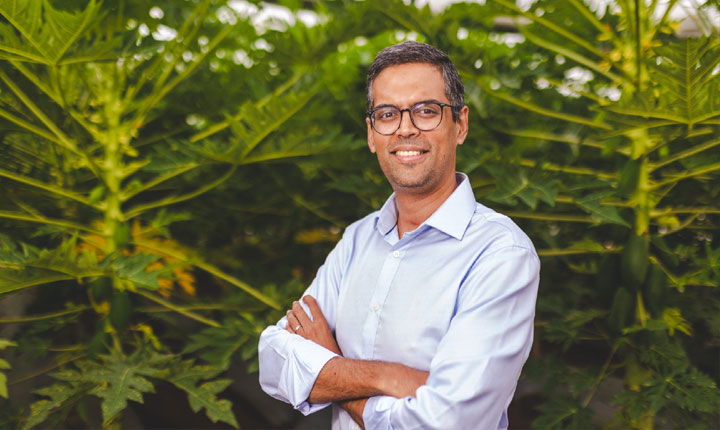


Kaushik Kappagantulu spent years assisting young individuals from disadvantaged backgrounds through vocational training before noticing that many of these youth originated from struggling farming families. This insight led him to establish Kheyti in 2015, an agri-tech company named after the Hindi word for farming. The initiative primarily targets smallholder farmers who produce a significant portion of India’s staple foods yet encounter mounting hurdles from extreme weather, unseasonable rainfall, and declining groundwater levels. During severe summer heatwaves, sensors installed by Kheyti have documented ground temperatures soaring as high as 125 degrees Fahrenheit, threatening the livelihoods of farmers who typically earn around $1,000 annually.
The “Greenhouse-in-a-Box” Innovation and Impact:
To combat these harsh environmental conditions, Kheyti designed a compact “greenhouse-in-a-box” tailored for farmers managing roughly an acre of land. These net houses utilize specialized shade cloth to drop internal temperatures by about 9 degrees Fahrenheit and incorporate efficient drip irrigation alongside an AI-powered tool that assists with crop selection and pest management. Utilizing this system allows farmers to cut crop losses by 58%, decrease water usage by 67%, and reduce fertilizer consumption by 70%, ultimately tripling their net income compared to non-Kheyti farmers on equivalent plots.
Expansion, Subsidies, and Future Goals:
The structures are priced between $200 and $300, with local government partnerships, subsidies, and low-cost financing making them accessible to smallholders. Having won the Earthshot Prize in 2022, Kheyti currently supports approximately 7,000 farmers across eight Indian states and aims to double this figure within the upcoming year backed by the Indian government. Looking forward, Kappagantulu plans to introduce the greenhouse model internationally within three years, develop complementary products like flexible solar panels, and achieve a broader objective of helping one million farmers secure climate-smart livelihoods by 2033.