

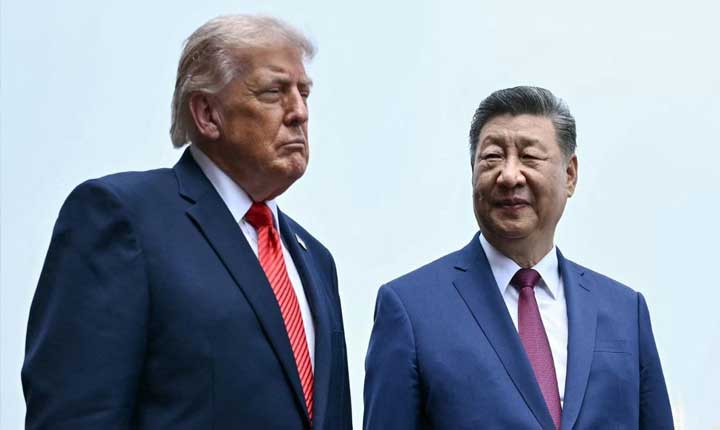


U.S. Treasury Secretary Scott Bessent’s declaration of an “economic onslaught” aimed at cutting off Iran’s global financial connections faces a significant obstacle: China. As Beijing serves as Iran’s largest trading partner and primary oil buyer receiving over 80% of Iranian oil shipments primarily through indirect channels the Trump administration must balance its maximum pressure campaign against Iran with maintaining a fragile trade truce ahead of President Donald Trump hosting Chinese leader Xi Jinping for a state visit next month. Bessent’s announcement avoided specific measures targeting China to prevent disrupting the upcoming summit, leaving analysts questioning the ultimate efficacy of “Operation Economic Outcast.”
Diplomatic Balance and Strategic Calculations:
Experts emphasize that both Washington and Beijing are navigating a delicate diplomatic dance. Edgard Kagan, senior adviser at the Center for Strategic and International Studies, noted that while a state visit to Washington is a major milestone for Xi, Trump is equally invested in hosting him. The core question is whether the U.S. can pressure China to scale back its engagement with Iran without pushing Beijing into flat refusal.
In response to the Treasury Department’s actions which included penalizing nearly 60 Iran-linked entities, targeting mainland China and Hong Kong entities supporting missile and nuclear programs, and sanctioning a China-owned crude oil tanker and a Hong Kong-based shadow fleet business China’s Foreign Ministry issued a holding response. Ministry spokesperson Lin Jian maintained that China-Iran cooperation operates within international law and should not be disrupted, asserting that China will take necessary measures to protect its rights while opposing unilateral sanctions.
Limits of Compliance and the Path Forward:
Sun Yun, director of the China program at the Stimson Center, suggests that Beijing will not support a campaign aimed at total economic collapse or regime change in Iran. However, if the objective is to pressure Iran into making concessions regarding the Strait of Hormuz and ending the conflict, China may demonstrate partial cooperation—such as modestly cutting back on oil imports without entirely severing ties.
Ali Wyne of the International Crisis Group highlighted that Trump is unlikely to adopt a highly confrontational posture toward China just a month before the summit, given his desire to preserve the trade truce and his personal rapport with Xi. Furthermore, the upcoming state visit could pave the way for Trump to travel to China in November for the Asia-Pacific Economic Cooperation (APEC) leaders summit. Craig Singleton of the Foundation for Defense of Democracies observed that Beijing is actively betting on Washington’s reluctance to jeopardize leader-level dynamics by targeting major Chinese entities ahead of the meeting.