

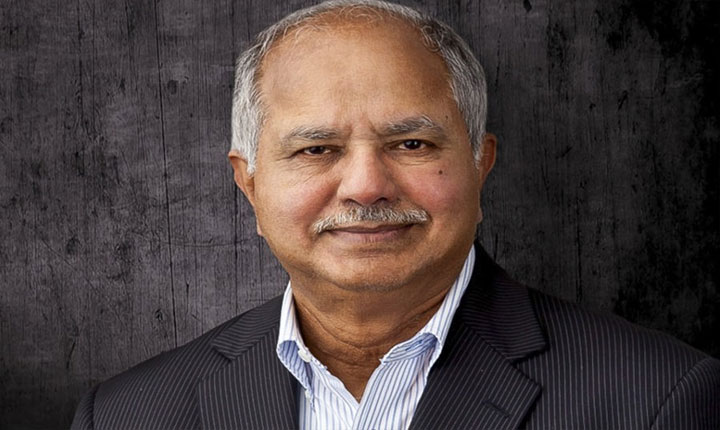


Born on June 13, 1937, in Katur village, Chittoor district, Dabbala Raja Reddy grew up far removed from modern conveniences. With electricity and running paper supplies being luxuries, young Reddy learned to write by tracing letters into sand. As a farmer’s son, he went barefoot for much of his childhood until he was around 16. Breaking barriers as the first in his family to attend college, he earned a civil engineering degree from the College of Engineering, Guindy, in 1958, before embarking on an international journey that altered history.
Path to Stanford and AI Pioneering:
Reddy’s encounter with computing began in Australia while pursuing his MTech at the University of New South Wales, followed by a stint at IBM. In 1963, he arrived at Stanford University to study under John McCarthy, the pioneer who coined the term “artificial intelligence.” In 1966, Reddy earned one of the earliest PhDs in computing under McCarthy, completing a dissertation on a computer program for playing Blackjack. His foundational work laid crucial groundwork for how machines handle reasoning, perception, and human interaction.
Teaching Machines to Listen and Lead:
Relocating to Carnegie Mellon University in 1969, Reddy pioneered research in speech recognition, language, and robotics. Alongside colleagues, he developed revolutionary systems like Hearsay I, Hearsay II, and Harpy, which enabled computers to process continuous human speech. In 1979, he founded CMU’s Robotics Institute affectionately dubbed the “Raj Mahal” and later served as the dean of the School of Computer Science. In 1994, he made history as the first person of Asian origin to receive the prestigious ACM Turing Award, sharing the honor with Edward Feigenbaum.
Impact on India’s Technological Landscape:
Reddy’s vision extended well beyond global academia; he played a vital role in shaping India’s tech ecosystem. When Hyderabad was being envisioned as a technological hub, then-Chief Minister N. Chandrababu Naidu turned to Reddy for strategic direction. Furthermore, he served as the founding chairman of IIIT Hyderabad and helped establish the Rajiv Gandhi University of Knowledge Technologies to empower gifted rural youth. Recognized globally with honors like the French Legion of Honour and nationally with India’s Padma Bhushan in 2001, Reddy’s lifelong mission has remained anchored in leveraging AI to uplift communities at the economic grassroots.