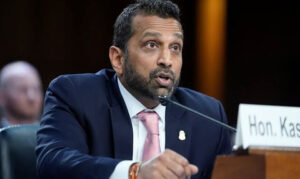





China’s Belt and Road Initiative has shifted away from financing infrastructure development and has instead transformed into a debt collection operation targeting countries struggling to repay their loans, according to US Treasury Secretary Scott Bessent. Testifying before the House Financial Services Committee during a hearing on the international financial system, Bessent accused Beijing of utilizing opaque lending terms and hidden provisions that severely obstruct debt restructuring efforts in developing economies. He noted that the initiative has bankrupted or is actively bankrupting many of its borrowers.
Transparency Demands and G20 Discussions:
Responding to questions from Republican Representative Scott Fitzgerald regarding delayed debt restructurings and currency management, Bessent emphasized that financial transparency is crucial for nations attempting to renegotiate unsustainable debt. The United States formally raised concerns regarding Chinese lending practices during the recent Group of 20 (G20) meeting held in Asheville, North Carolina. Bessent noted that the International Monetary Fund (IMF) strongly supports greater public disclosure of lending terms. While he did not specify the country or provide a timetable, Bessent shared that the first debt restructuring following the recent G20 discussions is expected to take place soon.
Scrutiny of International Financial Institutions:
The congressional hearing also heavily scrutinized China’s role and standing within major multilateral organizations like the World Bank and the IMF. House Financial Services Committee Chairman French Hill praised the World Bank’s decision to phase out lending to China by 2031, arguing that American taxpayers should not subsidize financing for the world’s second-largest economy. Lawmakers further questioned whether the IMF is doing enough to address China’s domestic economic imbalances, with Bessent confirming that the fund has been holding advanced discussions with Beijing on the matter. Additionally, lawmakers pressed Bessent regarding China’s designation as a non-market economy and its resistance to multilateral criticism at the G20.
Background of the Belt and Road Initiative:
Launched by Chinese President Xi Jinping in 2013, the Belt and Road Initiative was originally designed to finance major ports, railways, roads, and energy projects across Asia, Africa, Europe, and Latin America. However, numerous recipient nations have encountered severe repayment difficulties, prompting widespread requests for debt restructuring. India notably declined to join the initiative, raising strict objections over projects like the China-Pakistan Economic Corridor passing through Pakistan-occupied Kashmir. Meanwhile, Beijing consistently rejects allegations that the program serves as a “debt trap,” instead describing the initiative as a constructive platform for international infrastructure development and economic cooperation.