

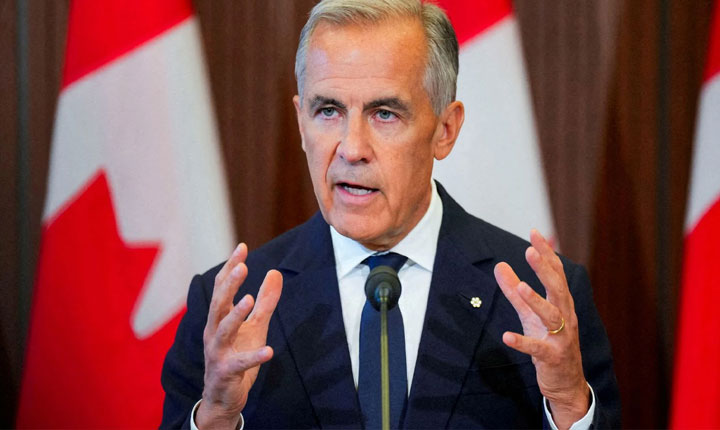


Canadian Prime Minister Mark Carney revealed that his government seriously evaluated the “extreme tail risk” of potential U.S. military action against Canada following repeated suggestions from U.S. President Donald Trump that Canada should become America’s 51st state. Speaking to The New York Times, Carney emphasized that assessing unlikely military scenarios is a fundamental part of risk management in leadership, stating that failing to do so would be irresponsible, even though a direct attack remains an improbable base case.
Escalating Trade Strains and Economic Diversification:
The bilateral friction comes amid worsening trade relations driven by newly imposed U.S. tariffs and Canada’s retaliatory measures. Carney argued that these disputes highlight the dangerous vulnerability of Canada relying too heavily on a single economic partner for the past four decades. In response, Ottawa has aggressively pursued trade development and market diversification rather than waiting for a return to past trade norms. Reports suggesting Canada could pursue associate membership in the European Union have further stoked tensions, with President Trump warning of heavy retaliatory tariffs against European trade if the move is perceived as hostile.
Rejection of Statehood and Strategic Independence:
Firmly rejecting any notion of Canada being absorbed into the United States, Carney continues to champion strategic economic independence. By expanding commercial partnerships beyond American borders and insulating the Canadian economy from future political disruptions in Washington, the government aims to safeguard national sovereignty. Meanwhile, the ongoing diplomatic sparring underscores a profound shift in U.S.-Canada relations, moving past simple economic integration into broader questions of strategic autonomy.