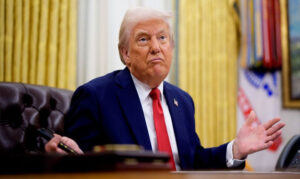


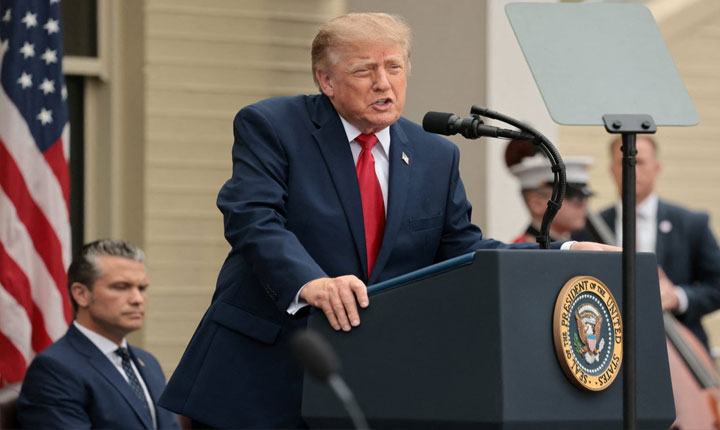


President Donald Trump has announced a proposal to issue a $5,000 “dividend” to every adult United States citizen, conditional upon Republicans retaining control of both the House of Representatives and the United States Senate in the November elections. Trump stated that the payout funds would be restricted to being spent within the United States. However, the initiative remains purely a political proposal rather than an approved federal program, lacking formal legislation specifying eligibility rules, payment dates, or a definitive financing plan.
Administration’s Proposed Funding Sources:
Addressing questions regarding how such a massive payout could be financed, US Commerce Secretary Howard Lutnick stated in an interview with NBC News that the funds would neither originate from taxpayers nor add to the national deficit. Instead, Lutnick suggested the administration could generate revenue through non-traditional government-backed streams, including a planned program targeting wealthy foreign nationals who pay substantial sums for immigration benefits, alongside financial gains from the federal government’s investment in chipmaker Intel. Additionally, Vice President JD Vance has suggested that tariff revenue could contribute to financing the payments.
Financial Feasibility and Projected Shortfalls:
The proposal faces significant scrutiny regarding its sheer scale and estimated cost. According to Tax Foundation estimates, providing a $5,000 payment to approximately 250 million eligible adults would total roughly $1.25 trillion. Conversely, the foundation estimates that Trump’s new tariffs would yield only about $125 billion in net federal revenue for 2027 representing approximately one-tenth of the required amount.
Furthermore, tariff revenue options have encountered legal and structural hurdles. Following a February 2026 US Supreme Court ruling determining that the International Emergency Economic Powers Act did not grant the president authority to impose “Liberation Day” tariffs, expected federal tariff collections have significantly decreased. Consequently, experts emphasize that tariff revenue alone remains insufficient to fund the program unless eligibility rules are drastically restricted or alternative, high-yield funding mechanisms are formally established.