



San Jose officials have announced that the city has dismantled large homeless camps, leading to a return of wildlife and increased use of walking trails as the city enters a new phase focused on reducing street homelessness. Over the past 18 months, San Jose has reportedly reduced its unsheltered homeless population by 32%. This decline was calculated using a novel counting model developed in partnership with UrbanLogiq, an artificial intelligence-based data platform. The system aggregates information from various sources, including police and fire department encounters with homeless residents, lived-in vehicle counts, and the countywide Homeless Management Information System database.
Decline in Numbers and Temporary Shelters:
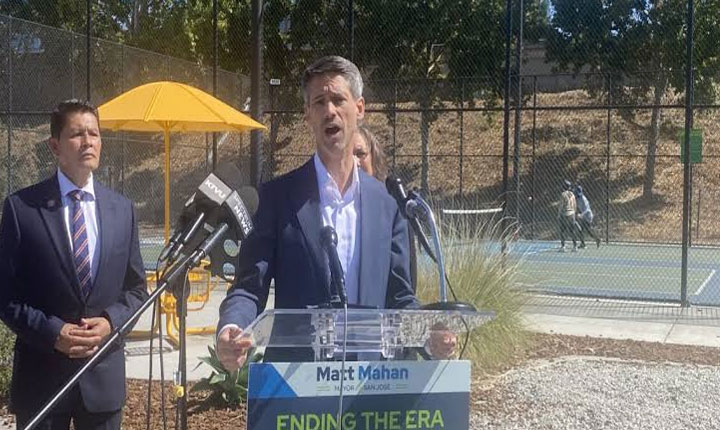
Utilizing this new framework, the city estimated approximately 3,700 individuals living on the streets, marking a decrease from the 5,477 unsheltered homeless people recorded in February 2025. San Jose Mayor Matt Mahan attributed this progress to the establishment of temporary housing through tiny homes. At a Wednesday news conference, Mahan highlighted that this drop is faster than any other city in California, noting the absence of large, persistent semi-permanent encampments and open-air drug markets.
The city’s tracking model yields different figures compared to the federal government’s biennial point-in-time counts. For instance, a point-in-time count in January 2025 recorded 6,503 total homeless residents, comprising 3,959 unsheltered individuals and 2,544 residing in temporary housing. Point-in-time counts are often viewed as underestimations because they track individuals over a brief two-day window. Combined city and county estimates place the number of people in temporary housing at roughly 3,000, bringing the total estimated homeless population to approximately 6,700. City officials intend to utilize this updated counting methodology on a quarterly basis.
Path to Functional Zero and Criticisms:
Moving forward, San Jose aims to achieve “functional zero” a status where more individuals are housed than enter homelessness by maintaining 2,200 shelter beds distributed across roughly 20 sites. However, Housing Director Erik Soliván noted that for every individual housed in the region, nearly two people become homeless.
Critics and advocates, such as Bea Nasser, argue that the city’s strategy prioritizes a numbers-driven approach aimed at minimizing visible homelessness rather than ensuring long-term stability. Nasser pointed out that many residents relocated from major encampments like Columbus Park and “the Jungle” faced severe challenges, noting that out of 16 residents she assisted from the Motel 6 transition site, 12 returned to the streets due to strict rules, restrictions on personal belongings, and psychological distress. Furthermore, while the city weighs instituting time-limited stays at temporary shelters to streamline the housing pipeline, advocates caution that this policy may foster instability given that approximately 6,000 households in Santa Clara County remain on waiting lists for permanent housing placements.