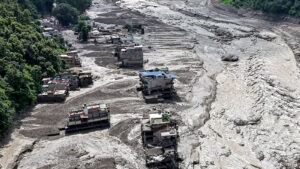


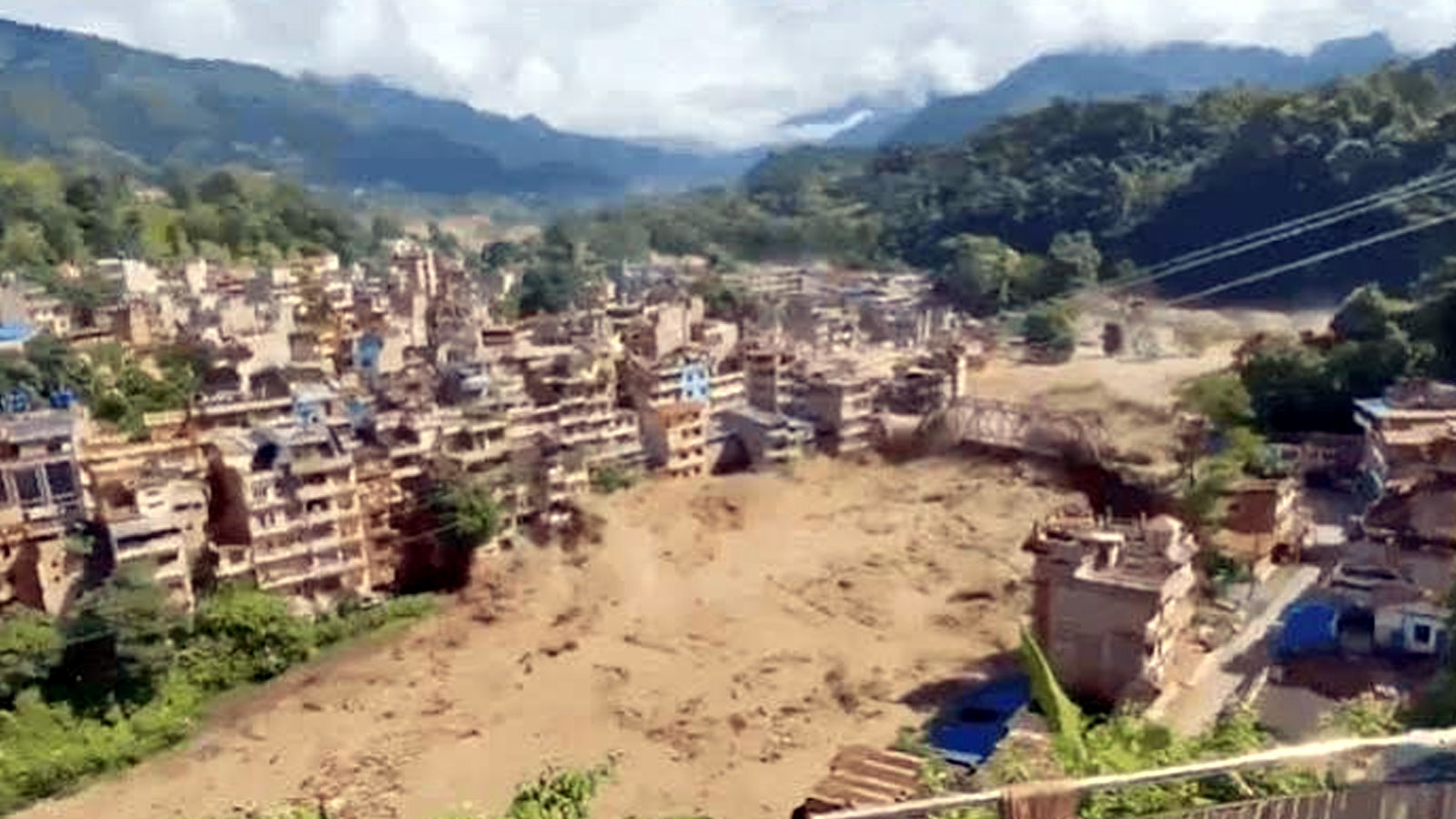


Catastrophic flash floods and mudslides along the Himalayan border region of Nepal and Tibet have left at least 165 people dead and hundreds missing, while prompting flood alerts in neighboring districts of India’s Uttar Pradesh and Bihar. The disaster was triggered when an enormous mass of mud and debris broke away from the banks of the Lhende River, which runs between China and Nepal. The resulting surge of water tore through the paths of the Bhote Kosi and Trishuli rivers, sweeping away homes, roads, bridges, and power plants across Nepal.
Scale of Devastation and Missing Foreign Nationals
Casualties and Missing Persons: Authorities report that at least 162 people have died in Nepal, with 403 individuals still unaccounted for—including 142 Indian nationals, alongside citizens from Australia, Britain, Malaysia, the Netherlands, Portugal, South Africa, South Korea, and the United States.
Tibet Border Impact: In China’s Tibet region, state media confirmed major casualties and a mudslide at the border hub of Gyirong, recording 3 deaths and 265 missing. Surveillance footage from the frontier captured a massive wall of mud engulfing a multi-story building as people fled, washing away cars and buses.
Wiped Out Communities: David Fisher, the Nepal head of the International Federation of Red Cross and Red Crescent Societies (IFRC), stated that entire villages and market areas have been completely wiped out, leaving rescuers wading through thick sludge as floodwaters buried the lower floors of multi-story buildings.
Ongoing Risks and Expert Warnings
Threat of Secondary Floods: Experts have issued urgent cautions that a lingering blockage currently lodged upstream on the border river could trigger an additional flood wave. Qianggong Zhang, head of climate and environmental risks at the Kathmandu-based International Centre for Integrated Mountain Development (ICIMOD), warned that authorities are monitoring the blockage for secondary flooding risks.
Rescue Operations and Monsoon Context: The Nepali Army has deployed aircraft to rescue stranded individuals, while residents near vulnerable river zones have been urged to relocate. Monsoon rains from June to September routinely bring deadly floods and landslides to South Asia, with scientists noting that climate change is increasing the frequency and intensity of these extreme weather events.