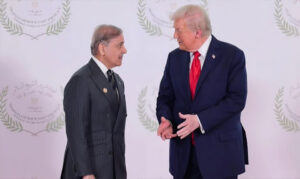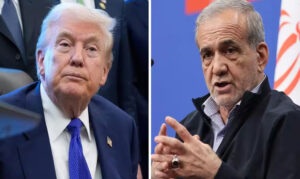


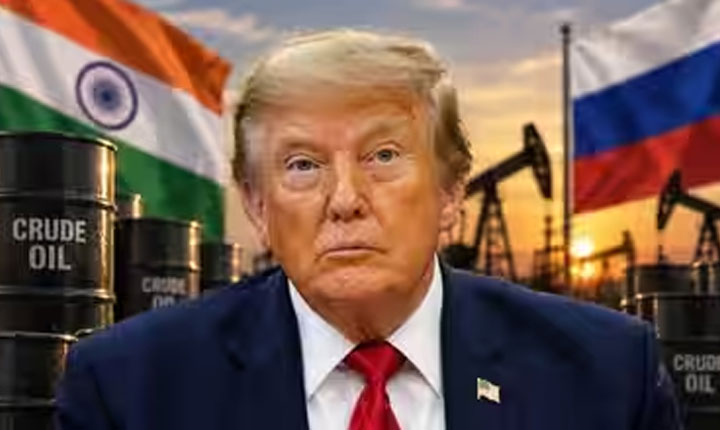


The U.S. House of Representatives has approved the Lindsey O. Graham Sanctioning Russia and Iran Act of 2026 by a 262–159 vote on September 16, following the Senate’s earlier 86–11 approval on August 7. The bill now awaits President Donald Trump’s signature.
The legislation grants the U.S. president the authority to impose tariffs of up to 100% on goods originating from countries that continue to purchase Russian oil and gas. Rather than enacting automatic sanctions or country-specific rates, the measure establishes a framework where covered nations face potential duties, subject to reviews by the U.S. Trade Representative every 180 days.
India’s Deepening Reliance on Russian Crude:
Since the onset of the conflict in Ukraine in 2022, discounted Russian crude has played a pivotal role in shaping India’s energy mix. According to the Global Trade Research Initiative, Russia accounted for 30.3% of India’s crude imports in fiscal 2026, totaling $40.8 billion out of a $134.7 billion import bill.
This share escalated further in 2026, with Russian crude comprising over half of India’s total imports in July, alongside supplies from the UAE, Saudi Arabia, Venezuela, Brazil, Oman, and the United States. Furthermore, data from the Centre for Research on Energy and Clean Air indicates that between December 2022 and August 2026, India absorbed 37% of Russia’s total crude exports, making it the second-largest buyer globally behind China at 50%.
Strategic Implications and India’s Official Stance:
The impending legislation has sparked serious anxieties in New Delhi regarding potential shocks to domestic energy costs and prospective barriers for Indian exports entering the U.S. market. Responding to these developments on September 17, India’s Ministry of Foreign Affairs emphasized that the nation remains steadfastly dedicated to safeguarding the energy security of its 1.4 billion citizens. The ministry also noted that it has clearly communicated to Washington the potential ramifications this legislation could trigger for bilateral ties and stability within the global energy market.