

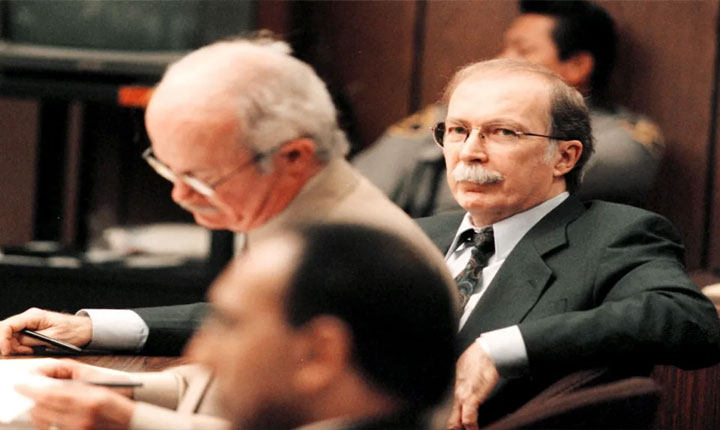


The California Board of Parole Hearings has denied parole for Rodney Blach, widely known as the “Fremont Bomber,” ruling that the 80-year-old inmate still poses a significant risk to public safety. Serving a 37-years-to-life sentence at San Quentin State Prison, Blach appeared via video call for his hearing, maintaining his innocence regarding the string of 1998 bombings in Fremont that led to his conviction 25 years ago.
Parole Hearing and Commissioners’ Rationale:
During the proceedings, commissioners Clifford Kusaj and Eleanore Adams deliberated for approximately 20 minutes before upholding the denial, echoing findings from his 2023 review. While acknowledging Blach’s age-related health complications, Commissioner Kusaj emphasized that the inmate has failed to demonstrate substantial personal or rehabilitative change over the past three decades.
The board pointed to several concerning factors during the hearing, including Blach’s continued maintenance of innocence, unhealthy fixations on female clinicians and officials, and improper efforts by outside supporters to investigate commissioners’ and clinicians’ social media accounts. Blach expressed a desire to return home to his wife, enjoy a quarter-acre garden, and visit farmers markets, but the board concluded his release would jeopardize public safety. Once the decision is formally finalized in 120 days, Blach will be eligible for another parole hearing in three years.
Background on the 1998 Fremont Bombings:
Blach, a former Chicago Police forensic investigator, was convicted in June 2001 on 11 felony counts of attempted murder, arson, and explosives possession. Federal investigators previously classified the devices as some of the largest domestic pipe bombs ever detonated in U.S. history.
Over a three-day period in March 1998, five of six planted bombs exploded across Fremont, targeting local figures such as former Councilmember and Police Chief Bob Wasserman, former Police Chief Craig Steckler, and personal acquaintances. Although no injuries resulted from the blasts, a massive multi-agency investigation led by the FBI and ATF culminated in 1999 when authorities recovered incriminating evidence in a storage locker. This included bomb-making materials, electronics, and encrypted journals detailing plans to target local institutions, ultimately sealing Blach’s conviction.