

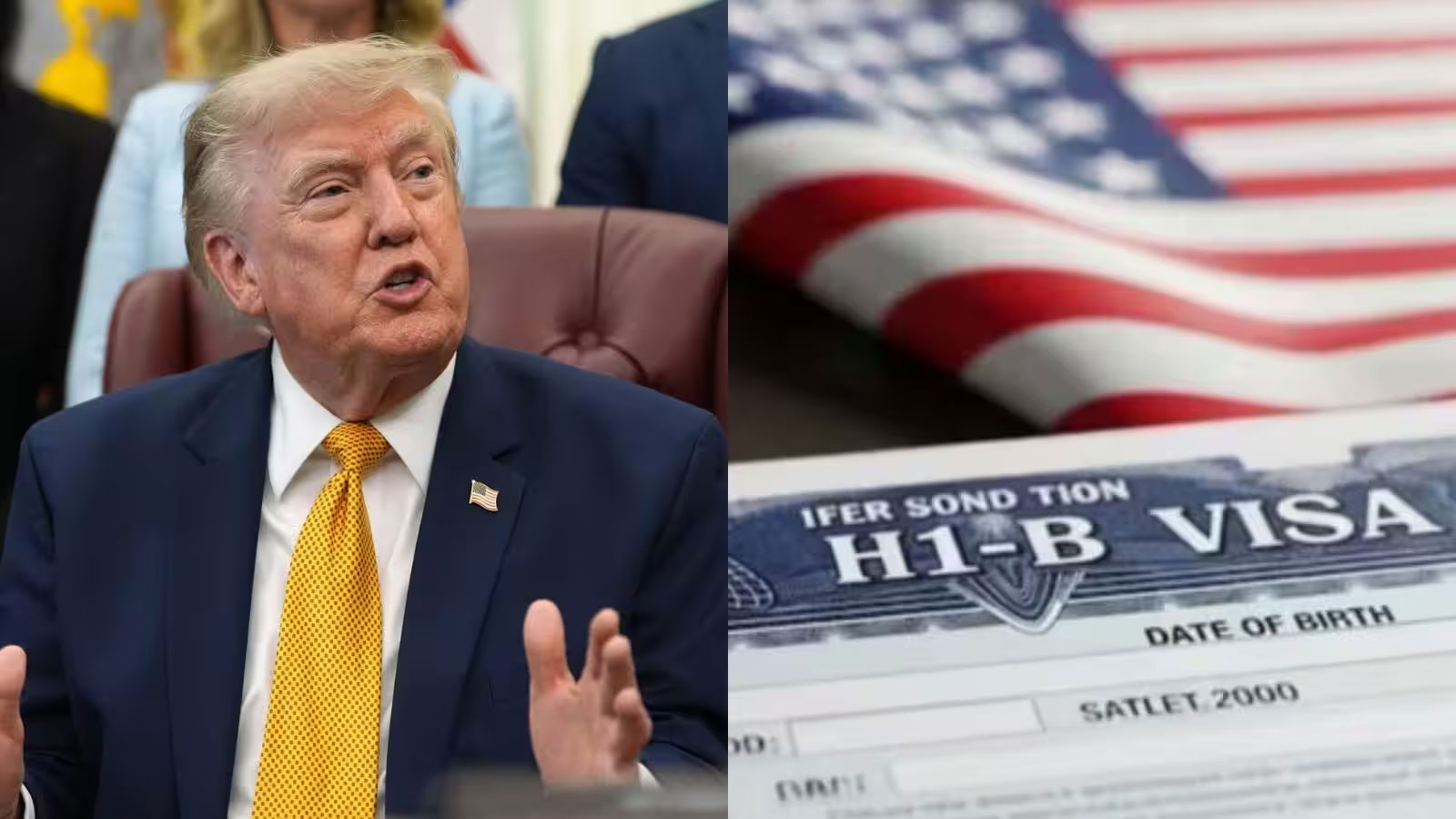


President Donald Trump has signed a new Executive Order directing federal agencies to examine whether companies sponsoring H-1B workers have recently laid off or plan to lay off American employees. Issued on September 18, the order instructs the Department of Labor, the Department of Homeland Security, and the Department of State to factor in an employer’s layoff history when reviewing Labor Condition Applications, H-1B petitions, visa applications, and entry into the United States. Agencies must consider whether sponsoring employers carried out direct or indirect layoffs during the previous year or plan future layoffs that negatively impact similarly situated U.S. workers.
This action will likely bring greater scrutiny to technology companies, outsourcing firms, and other employers that sponsor H-1B workers while simultaneously reducing their domestic workforce. Furthermore, old H-1B filings are coming under review as the order directs the Labor Department’s Wage and Hour Division to begin analyzing data from previously submitted Labor Condition Applications within 30 days to determine if further action is warranted under existing immigration law.
To strengthen program integrity, the administration is expanding coordination between federal agencies. The Department of Labor, Department of Homeland Security, and State Department are directed to consult with the Departments of Commerce and Education, as well as the Small Business Administration, to gather insights on wages, employment conditions, academic qualifications, and industry trends.
Until implementation guidance is released, the practical impact will depend on how the agencies apply the directive, but recent and planned layoffs are now officially identified as critical factors in H-1B decisions.
Officials emphasize that this Executive Order is entirely separate from a concurrent Presidential Proclamation announced on September 18. The separate proclamation extends restrictions connected to a 100000 dollar payment requirement for certain H-1B workers seeking entry into the U.S., running from September 21, 2026, to September 21, 2027. While the Executive Order focuses on layoffs, employer scrutiny, interagency data sharing, and past Labor Condition Applications, the Proclamation specifically addresses the payment requirement and entry restrictions.